From muscle capacities to animal locomotion



Our Mission
Uncovering the universal laws of muscle function
The FoVE research group seeks to uncover the fundamental laws of muscle function. We aim to understand what governs movement to reveal how animals survive in the wild, how elite athletes break records, and how illnesses restrict mobility. Grounded in modelling, biomechanics and physiology, our research relies on deep collaborations across applied mathematics, genetics, biology, and ecology.
Current Project
What we work on
How do we test the fundamental rules of muscle contraction? By combining mathematical models with novel experimental tools, from lab devices to field wearables. Inspired by Krogh’s principle, we test our theories on extreme models: elite athletes, impaired patients, and adapted wildlife. Through collaborations, we access extraordinary populations to advance fundamental science, while delivering actionable insights for athletic performance, clinical care, and biodiversity conservation.
Mathematics & Modeling
The FoVE Framework
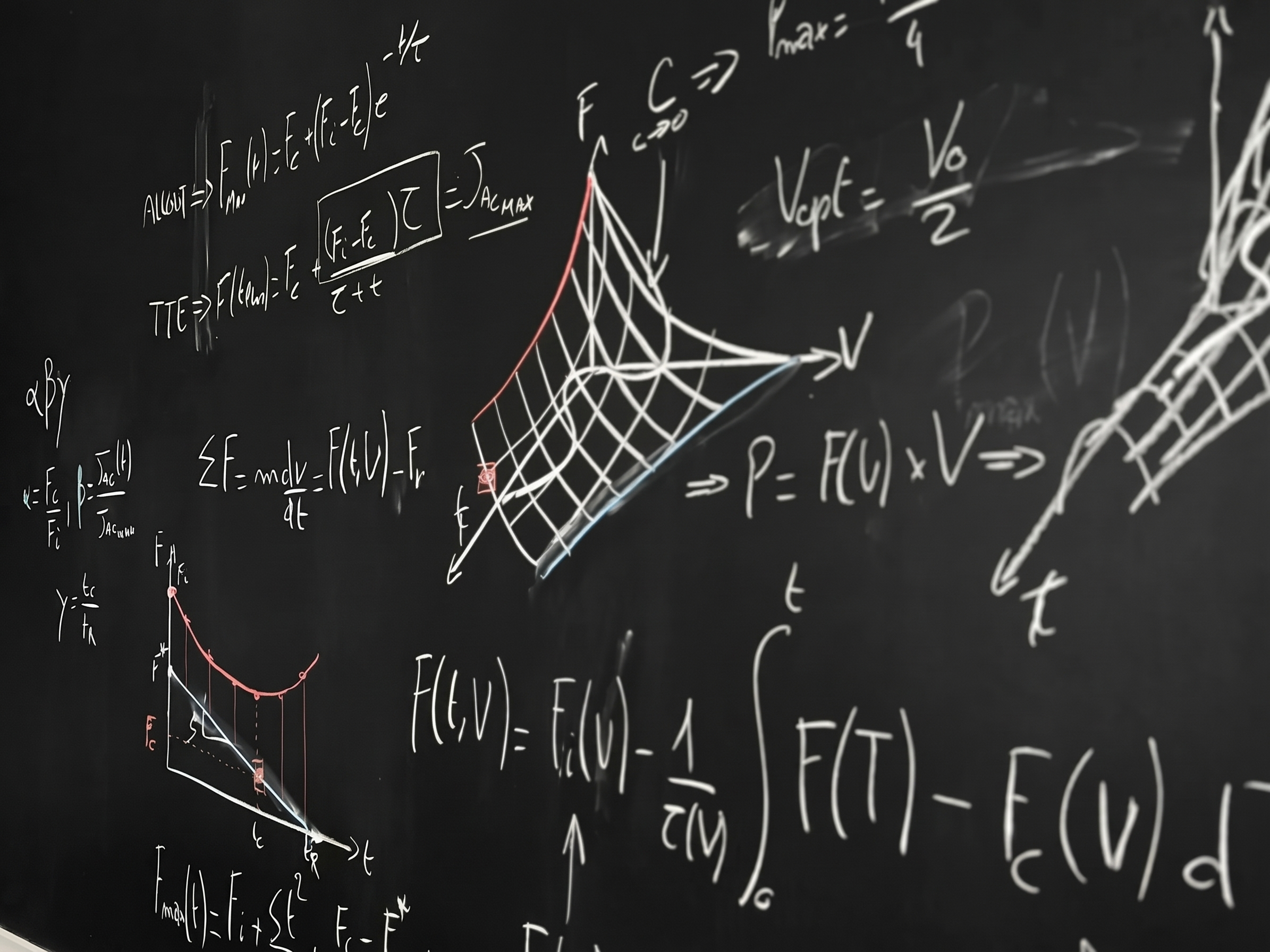
To understand movement, we develop mathematical models establishing universal laws of contraction and locomotion across biological scales and species.
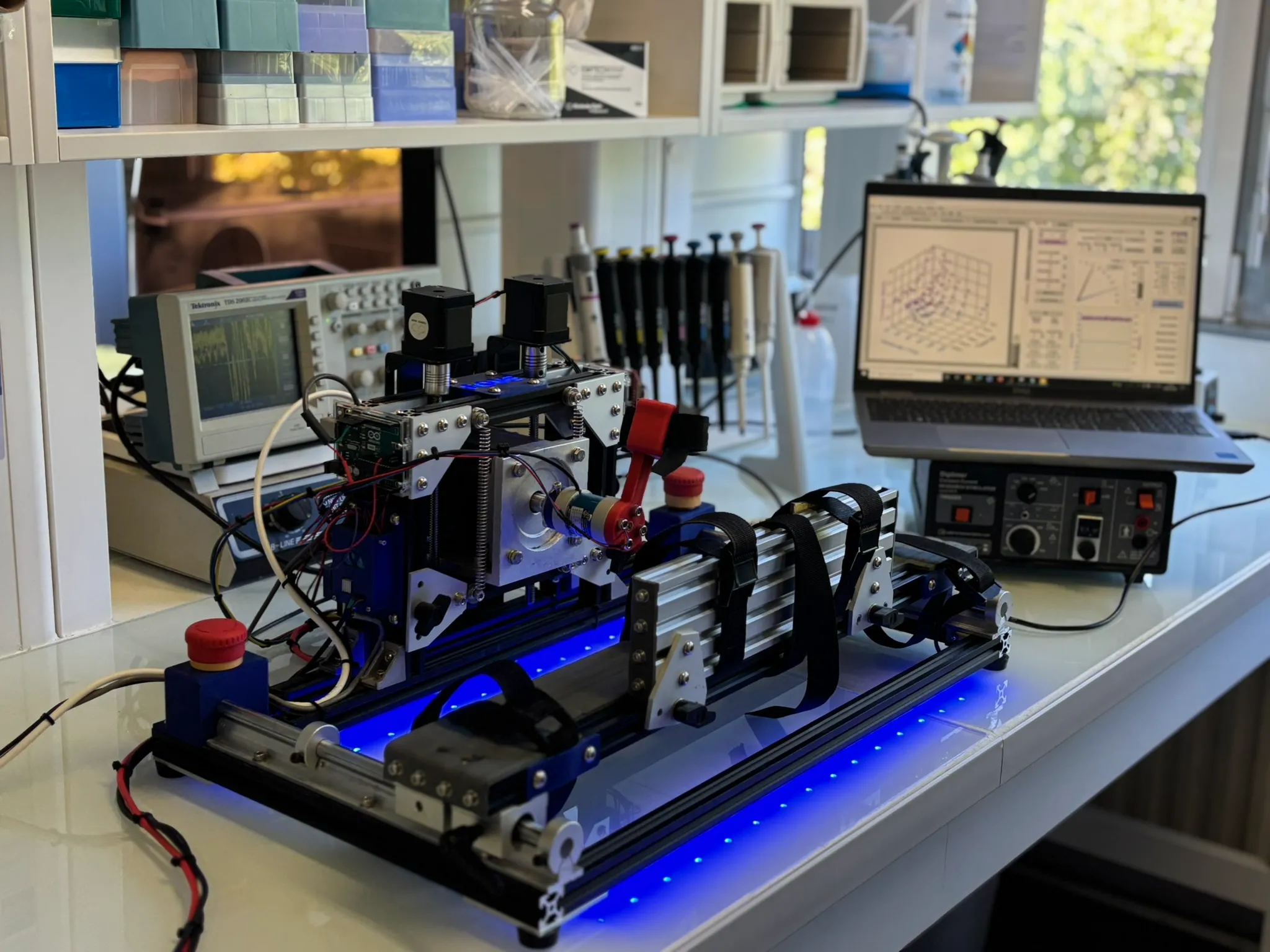
Hardware & Software
Evaluating Muscle Function
From unconscious patients to wild wolves, standard tests fall short. We engineer custom ergometers and bio-logging analytics to assess muscle function anywhere.
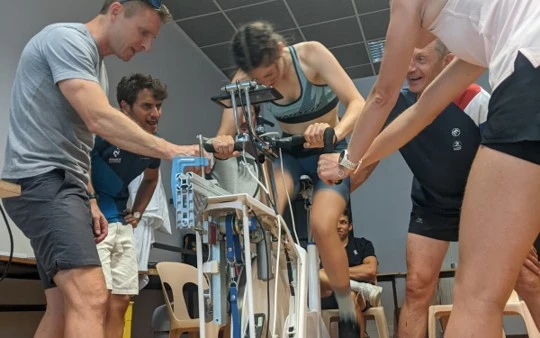
Sport
Pushing the Limits of Performance
What muscle traits make champions? Combining lab and field data, we profile physical limits to optimize athletic performance and training.
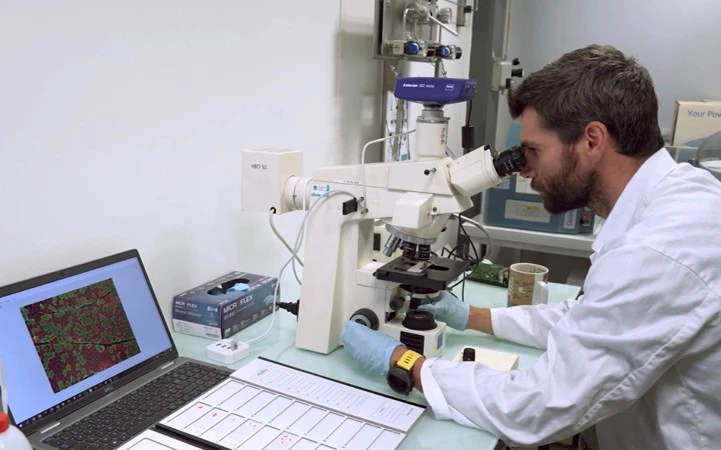
Health
From Models to Clinical Care
How do disease, aging, or inactivity alter movement? Applying a unified framework, we accelerate diagnostics and targeted care.
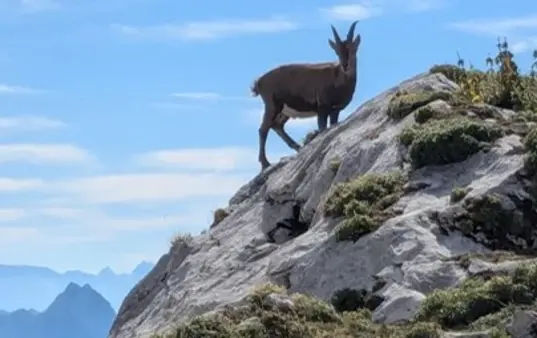
Ecology
Fatigue and Survival in the Wild
Climate change and human activity reshape wild habitats. Through bio-logging, we study how physical limits on animal movement
Research Team
Who we are
Based at the LIBM laboratory (Université Savoie Mont Blanc) between lakes and mountains in the French Alps, our team combines biomechanics and physiology with an interdisciplinary global network of collaborators. We regularly offer open positions at all levels. Get in touch!

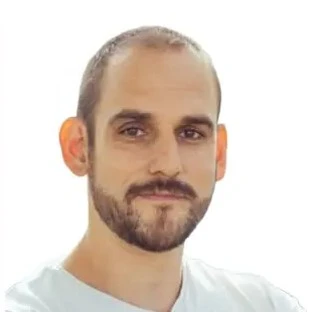
Baptiste Morel
Associate ProfessorBaptiste models muscle force-velocity-endurance across species, linking biomechanics to health, ecology, and sports.
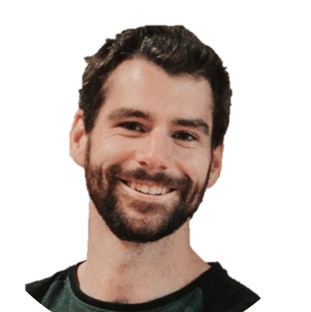
Maximilien Bowen
PhD, EngineerMax develops integrative math models and engineering solutions to map muscle and locomotion FoVE profiles.
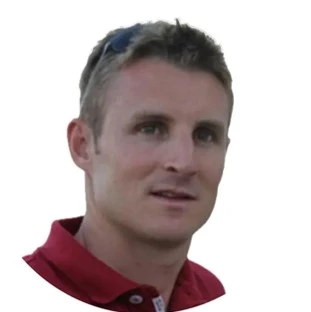
Pierre Samozino
Full ProfessorPierre explores the biomechanics of human and animal locomotion, from explosive force production to extreme endurance.
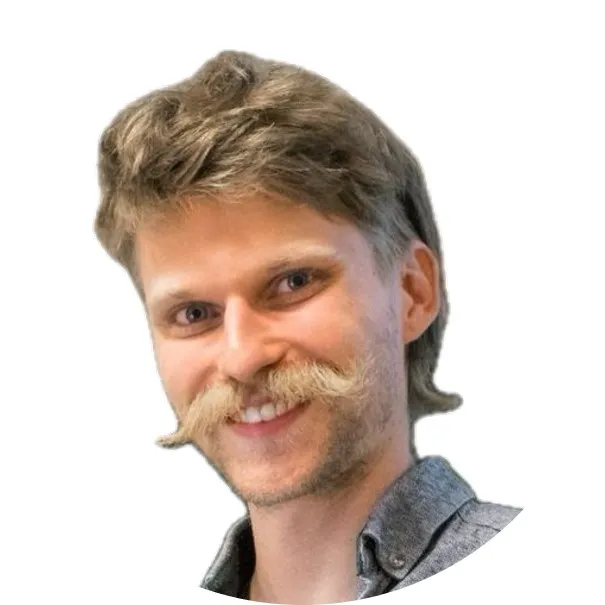
Clément Delhaye
Postdoctoral FellowClément engineers innovative clinical ergometers to evaluate adductor pollicis muscle function in intensive care units.
Mylène Vonderscher
PhD StudentMylène models animal locomotion in mountain environments, bridging the gap between sports performance and biodiversity.
Pablo Rozier-Delgado
PhD StudentPablo evaluates the locomotor endurance and critical capacities of wild animals using in natura accelerometry data.
Lucas Grangeat
PhD StudentLucas investigates the impact of fatigue on explosive force production in rugby using force-velocity-endurance profiles.
P.F. Busseneau
PhD StudentPierre-Florent uses FoVE profiles in ski mountaineering to individualize training and optimize race pacing strategies.
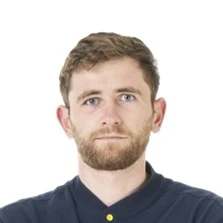
Tommy Grange
PhD StudentTommy analyzes in-situ running mechanics to assess how fatigue alters horizontal force capacity and sprinting in rugby.
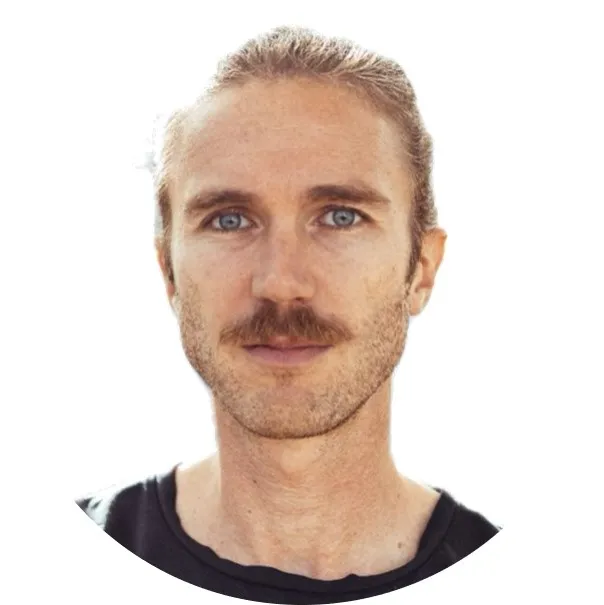
Franck Ponard
EngineerFranck engineers software and hardware solutions, translating physiological models into clinical and sports applications.
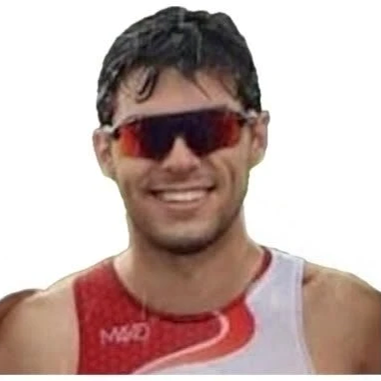
Thibault Cuenot
Master StudentThibault studies the muscle biomechanics and fatiguability in human chase-tag game, mimicking predator-prey dynamics.
Output
Sharing our discoveries
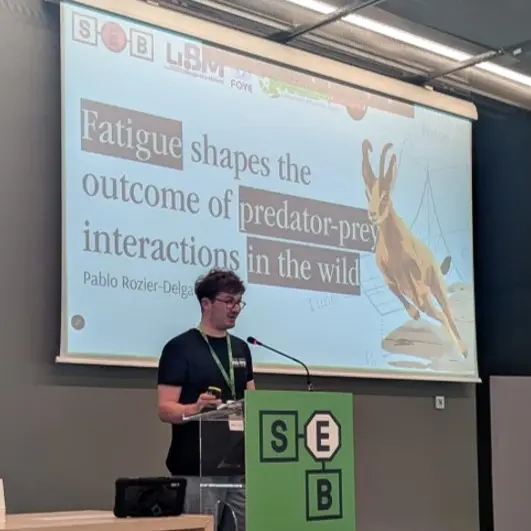
Our team is committed to taking science beyond the lab. You’ll find us presenting at conferences, publishing open code, engaging with schools and the public, or prototyping custom hardware. From fundamental discovery to clinical and industrial transfer, our members turn research into real-world impact.
Peers
Publications & Open Science
Through peer-reviewed papers, international talks, and open-source Git repositories, we ensure our findings and models remain freely accessible to our community.
General public
Public Engagement & Education
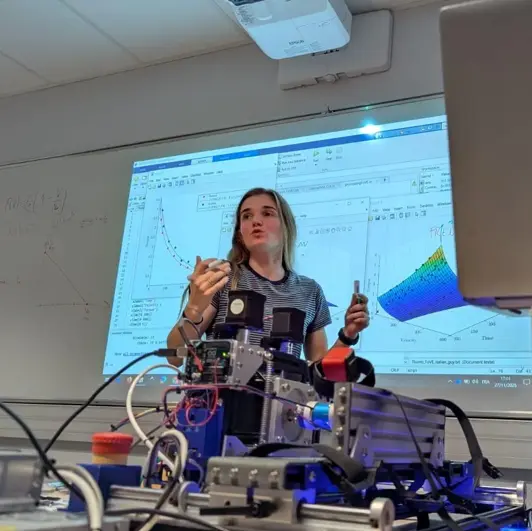
Science belongs to everyone. We engage the curious public with open lectures, media, and books, making our research accessible to inspire future generations.
Industry
Technology Transfer & Patents
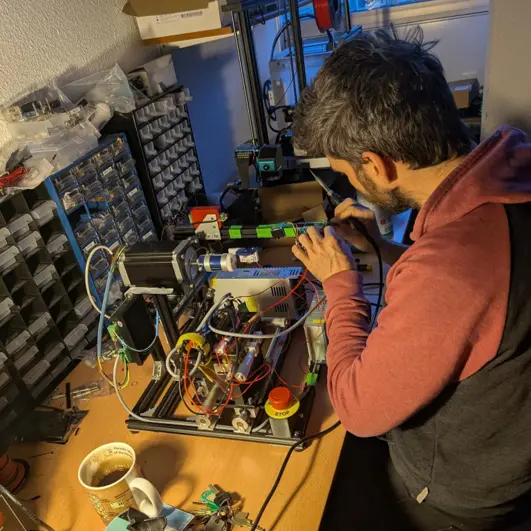
We turn basic science into patents, software, and devices. Partnering with industry and clinical sectors, our innovations deliver real-world functional solutions.
Supported by